Take this with you
- Free courses are often funded by cities and run by foundations — check your city hall's website.
- Ask at libraries, labour offices, university Polish centres and migrant organisations.
- A good course has a placement test, regular classes and lots of speaking.
- A course + 15 minutes a day + one conversation a week is a realistic plan for working adults.
Free courses funded by local governments
Some cities fund free Polish courses for adult foreigners, commissioning NGOs to run them. Kraków is one example: under its 'Open Kraków' (Otwarty Kraków) programme the city allocated PLN 300,000 for free courses for people aged 18+, at different levels in at least six districts, with recruitment in Polish, English, Ukrainian and Russian and the option for parents to attend with children. The classes were planned from May to December 2025.
Similar programmes exist in other cities, but they change every year and are often run by foundations chosen in a call. Look for them on the city hall's website (sections on foreigners or multiculturalism), at information points for foreigners and at migrant support organisations.
Other places worth asking
Besides city courses there are several regular sources of classes — some free, some paid but cheaper than private schools.
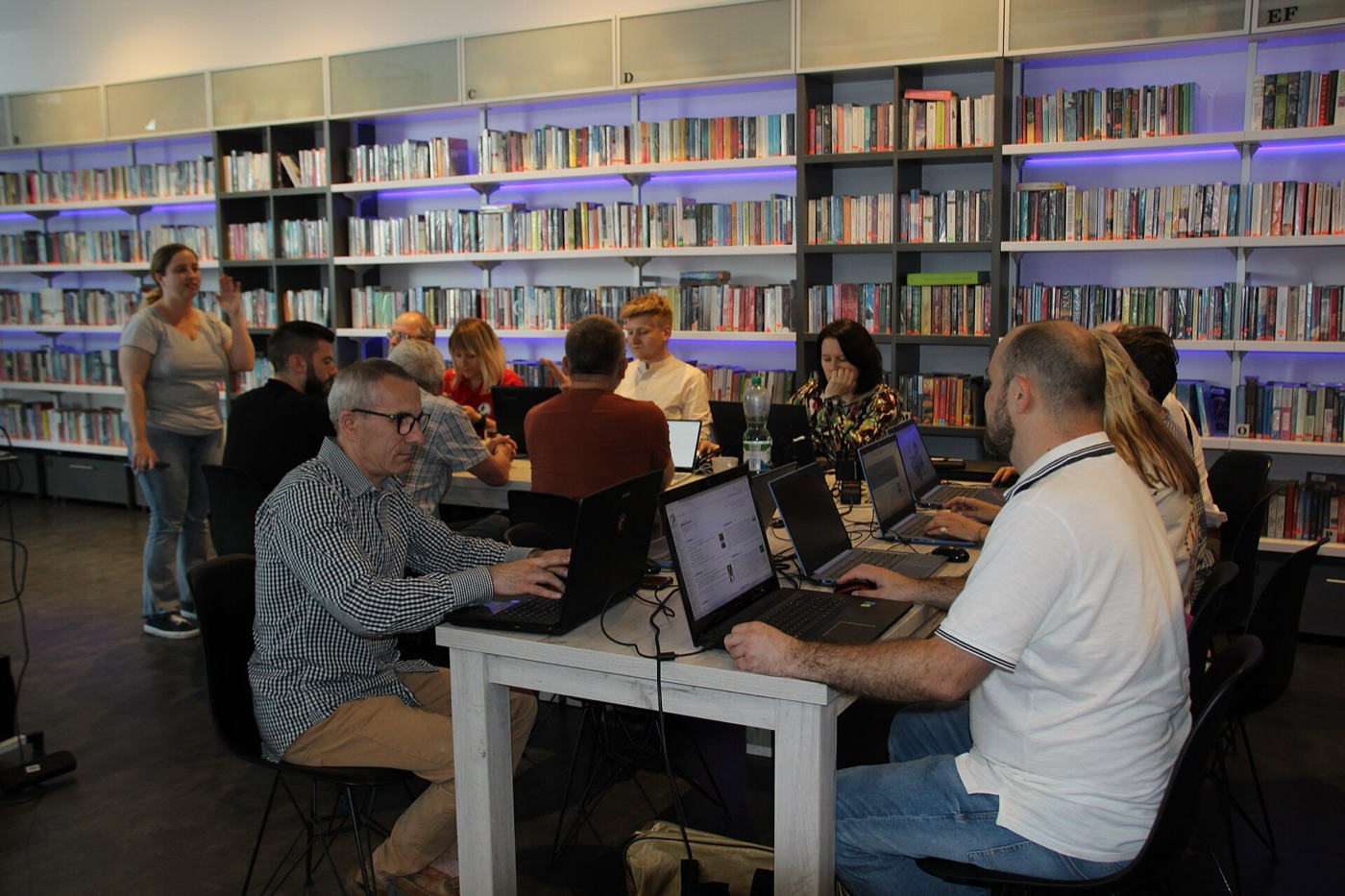
- Public libraries — conversation clubs, meetings for foreigners, Polish learning books to borrow.
- Powiat labour offices and publicly funded projects — language courses are sometimes part of employment programmes for foreigners.
- Polish language centres at universities — paid but well structured, often with certificate exam preparation.
- NGOs and parishes — volunteer-run courses, usually at beginner levels.
- Your employer — some companies co-fund courses, e.g. through the National Training Fund (KFS).
How to judge a course
A free course is good if it takes you to a specific goal. Ask before signing up:
- Is there a placement test and are there groups at different levels?
- How many hours does it last, and are classes regular (e.g. twice a week)?
- Do classes include speaking, not just grammar?
- Does it prepare for the certificate exam if you need one (e.g. B1 for a citizenship application)?
- Will you get a certificate of completion?
A plan for 4–5 hours a week
Adults learn best when they combine a course with daily contact with the language. A sample week for someone in work:
- 2 × 90 minutes of group classes (the course).
- 5 × 15 minutes of flashcard vocabulary review — on the tram or in a work break.
- 1 conversation in Polish a week outside the course: a library club, a neighbour, a colleague.
- 1 short written text: a message to your child's school, an email to an office — corrected by a teacher or friend.
- Daily passive contact: Polish radio, a podcast or a series with subtitles.
If your goal is a certificate
The state exam in Polish as a foreign language tests four skills in the written part (listening, reading, grammar, writing) plus speaking. Each must be passed separately — at B1 at least 50% of points in every module. So practise all four areas from the start, not just conversation.
Sources & further reading
Prepared with AI assistance using the sources below. Editorial standards ↗